
How 3D Printing Is Helping Small Businesses Save Time, Money & Materials
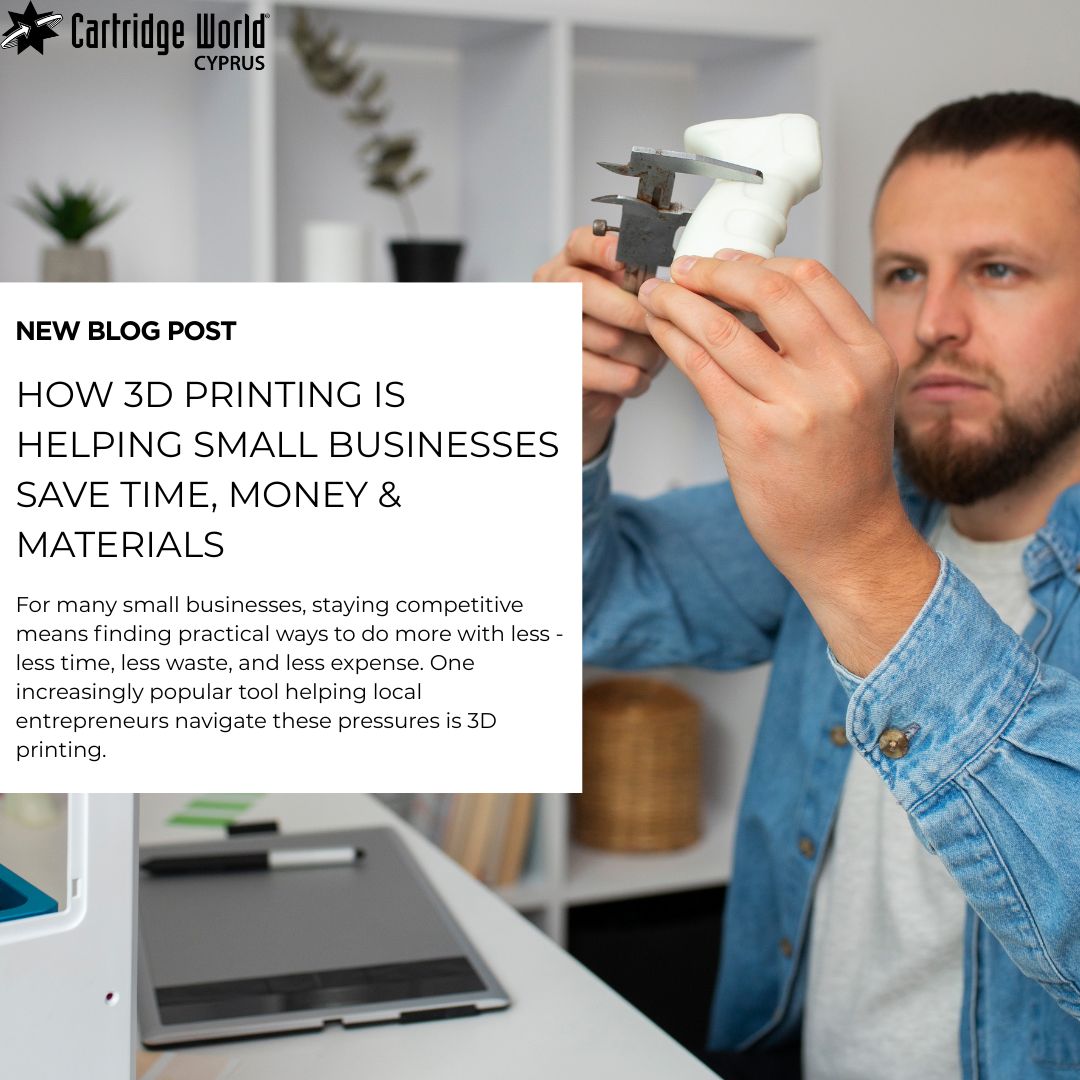
3D PrintingFor many small businesses, staying competitive means finding practical ways to do more with less - less time, less waste, and less expense. One increasingly popular tool helping local entrepreneurs navigate these pressures is 3D printing.
While often associated with technical industries or hobbyists, 3D printing is proving its value in everyday business settings - from local cafés and retail shops to repair services and educational centres. It’s giving small teams more control over their workflow and helping them solve problems that previously required costly or time-consuming solutions.
Time-Saving Potential in Everyday Operations
One of the clearest advantages of 3D printing is speed. For small businesses that rely on custom parts, fixtures, or prototypes, traditional manufacturing or ordering processes can be slow - especially when dealing with imports or specialty suppliers.
3D printing makes it possible to produce these items in-house, often in just a few hours. Whether it's a replacement part for a piece of equipment or a made-to-fit organiser for a workspace, being able to act quickly can minimise downtime and help keep operations running smoothly.
Many businesses use 3D printing to experiment with ideas on the spot, creating custom solutions that wouldn’t be feasible to source externally in small quantities.
Reducing Costs Through On-Demand Production
Budget constraints are a common challenge for small businesses, especially when customisation or replacement components are needed. With 3D printing, there’s no need to order in bulk or maintain large inventories. It allows for on-demand production, where only what’s needed is printed - reducing surplus and associated costs.
It also makes it possible to repair rather than replace. Small plastic components, knobs, brackets, or even packaging elements can often be recreated quickly using a 3D printer, avoiding the need to purchase expensive replacements or full new products.
Practical Applications in a Variety of Sectors
Here are just a few examples of how small businesses are incorporating 3D printing into their work:
- Retail stores use it to produce shelf organisers, product displays, or spare parts for equipment.
- Hospitality venues have printed custom holders, signage, or accessories tailored to their branding.
- Repair shops often recreate broken or discontinued parts that are no longer available.
- Education centres design hands-on learning tools for classrooms and workshops.
- Creative studios and salons make their own branded display pieces or accessories.
A Tool for Problem-Solving, Not Just Production
What makes 3D printing especially useful for small businesses isn’t just the ability to make things - it’s the way it supports problem-solving. Whether it’s adapting to space constraints, improving workflow, or finding a way to replace something broken or unavailable, the flexibility of the technology is its real value.
It’s not about replacing traditional tools or processes, but complementing them - giving small businesses the ability to respond faster and more creatively to their specific needs.
As businesses continue to seek out tools that are adaptable, cost-effective, and aligned with sustainable values, 3D printing offers a practical path forward - one that rewards experimentation, encourages innovation, and supports local resilience.

Explore 3D Printing: https://cwcyprus.com/department/3d-printing